
AI Owner Requirement Extraction Agent
Automating Owner Requirement Extraction with AI
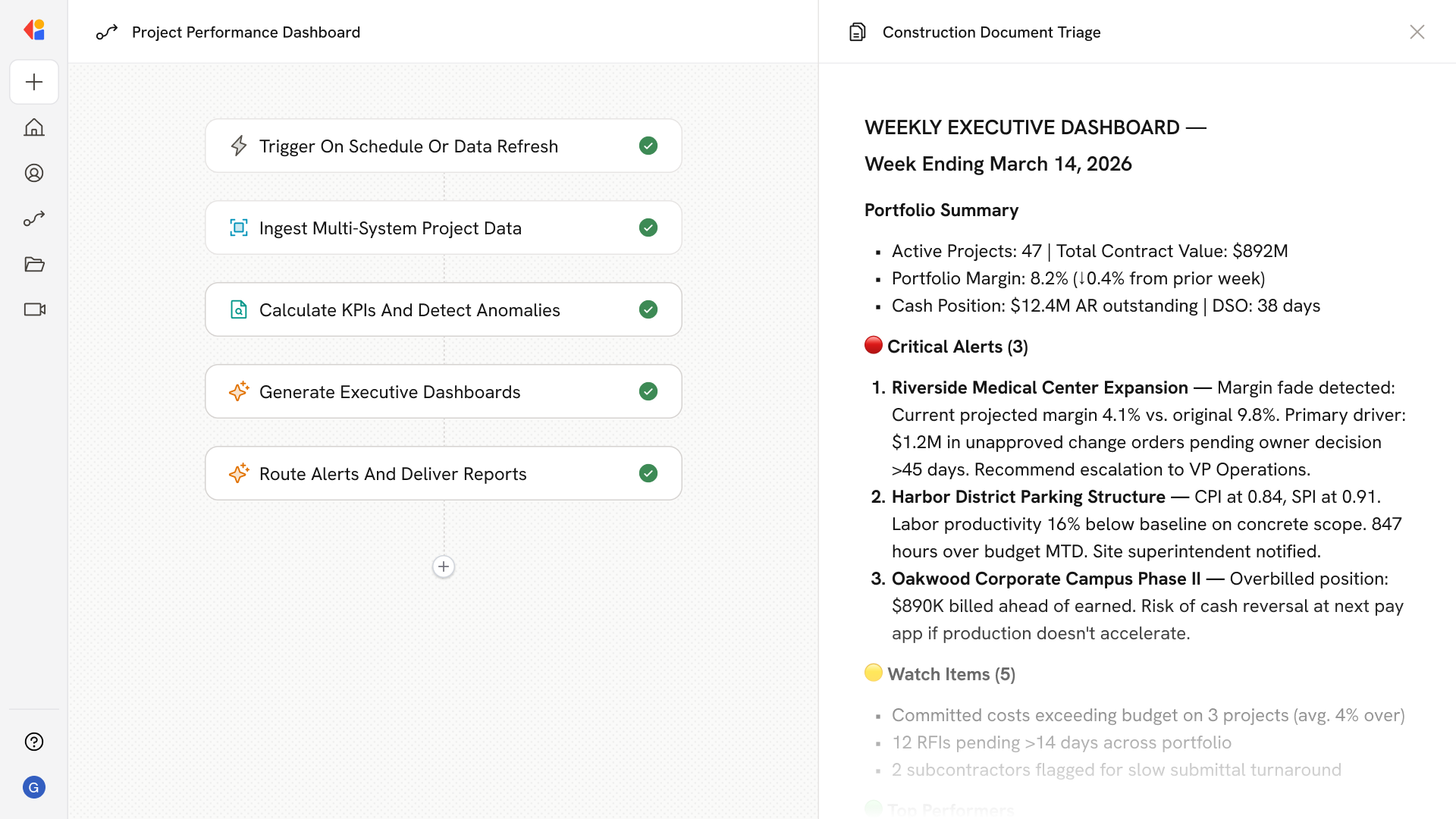
Parse and structure requirements from fragmented sources
The agent converts RFPs, bridging documents, owner standards, and addenda into machine-readable text, then extracts normative language and tags each requirement with discipline, verification method, and priority—eliminating manual review of scattered PDFs.
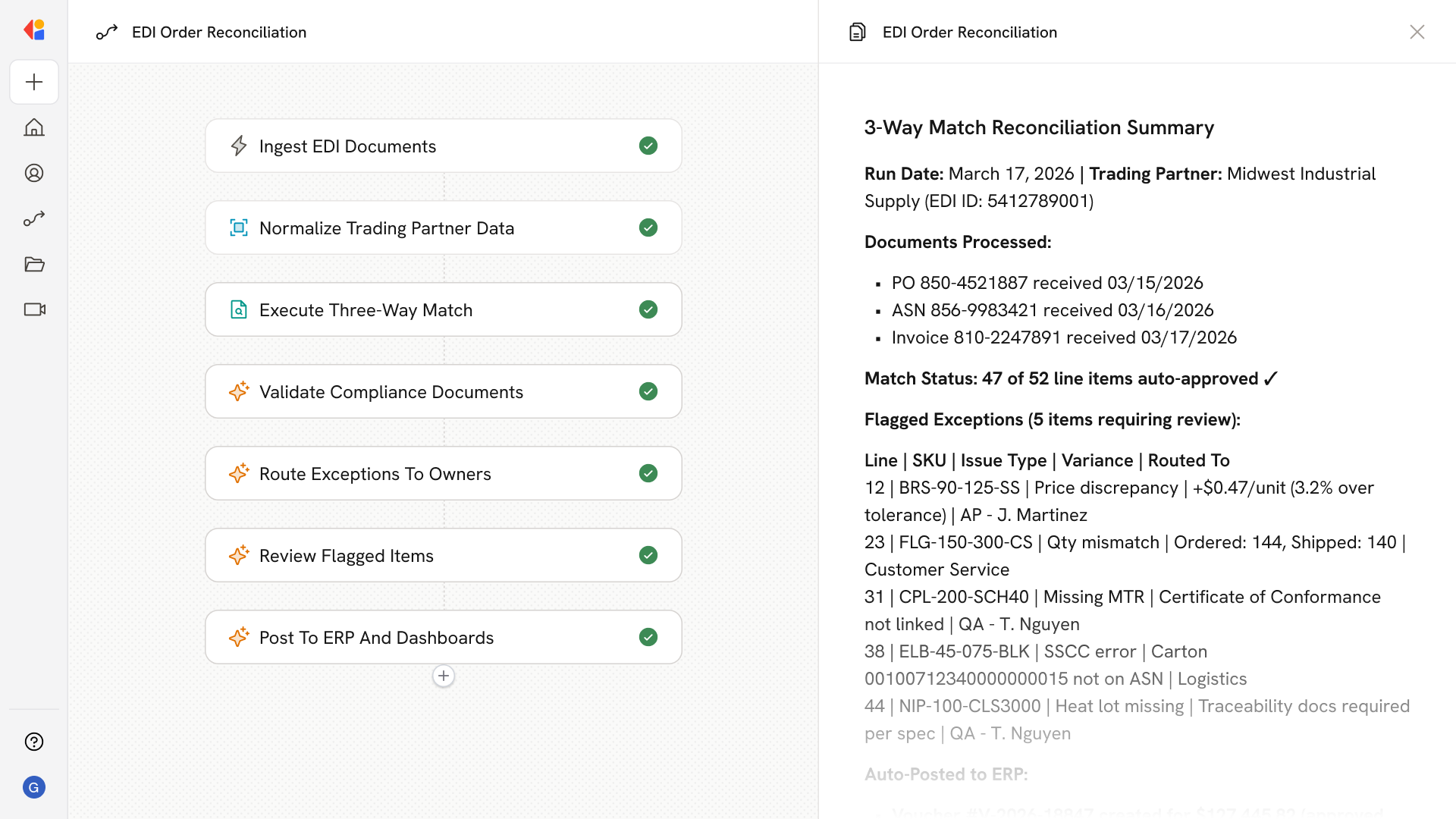
Build live compliance and traceability matrices
Automated workflows generate RFP compliance matrices, OPR–BOD conformance reports, and requirements traceability matrices that link each owner criterion to design elements, submittals, and commissioning procedures.
Surface conflicts and drive clarifications
AI flags ambiguous or contradictory requirements—such as bridging docs conflicting with current codes—and auto-suggests RFIs, maintaining an assumptions log and risk register tied to cost exposure.
How Cassidy automates using AI
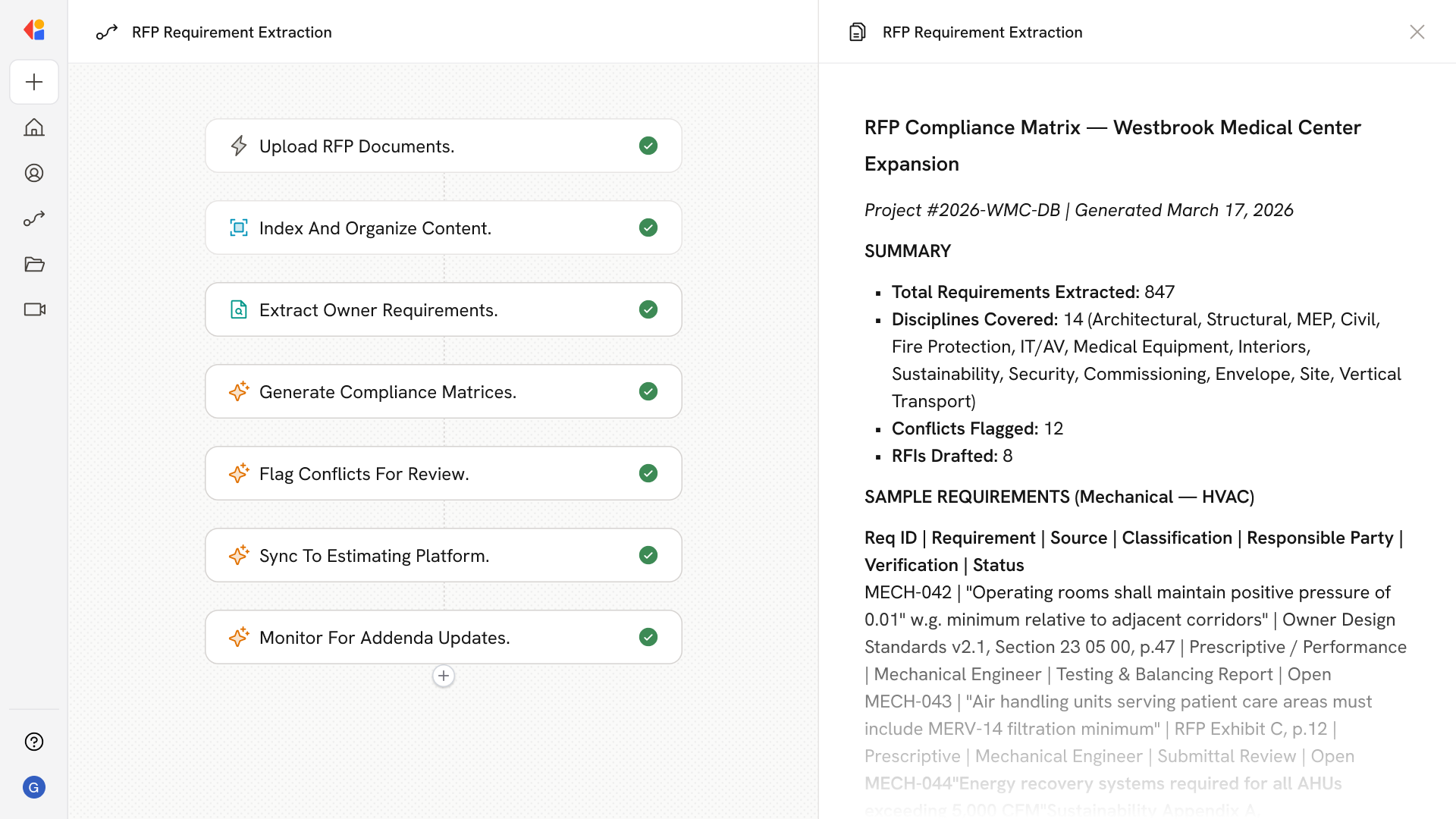
Step 1: Trigger on document upload or addendum release
The Workflow activates when RFP packages, bridging documents, owner design standards, or addenda are uploaded to your connected storage—Google Drive, SharePoint, or project management platform.
Step 2: Normalize and index the corpus
Cassidy converts scanned documents via OCR, chunks content by logical sections (CSI MasterFormat, UniFormat, discipline chapters), and registers each file with version control and source metadata.
Step 3: Extract and classify requirements
The Agent detects obligation language (shall/must/required), captures requirement statements with source citations, and classifies each by discipline, phase relevance, verification method, and whether it's performance-based or prescriptive.
Step 4: Generate compliance and conformance matrices
Cassidy auto-builds an RFP compliance matrix showing each requirement, responsible party, required evidence, and status—plus an OPR–BOD conformance matrix mapping owner criteria to the developing Basis of Design.
Step 5: Flag conflicts and route for clarification
Ambiguous or contradictory requirements are flagged and routed to the appropriate discipline lead for review. Cassidy suggests RFI language and maintains an assumptions/qualifications log with Human-in-the-Loop approval.
Step 6: Sync to estimating and project controls
Requirements tagged as cost drivers push directly to your estimating platform for target value design and GMP development, ensuring scope changes are tracked against the basis of estimate.
Step 7: Monitor changes and alert stakeholders
Cassidy continuously monitors for new addenda and revisions, runs redline comparisons to surface changed or dropped requirements, and notifies responsible parties with an audit trail of who updated what and when.
Implement it inside your company
- Hands-on onboarding and support
- Self-paced training for your team
- Dedicated implementation experts
- Ongoing use case discovery
- ROI tracking & analytics dashboards
- Proven playbooks to get started fast