How Cassidy automates ad compliance monitoring using AI
Step 1: Ingest creatives and connect ad platforms
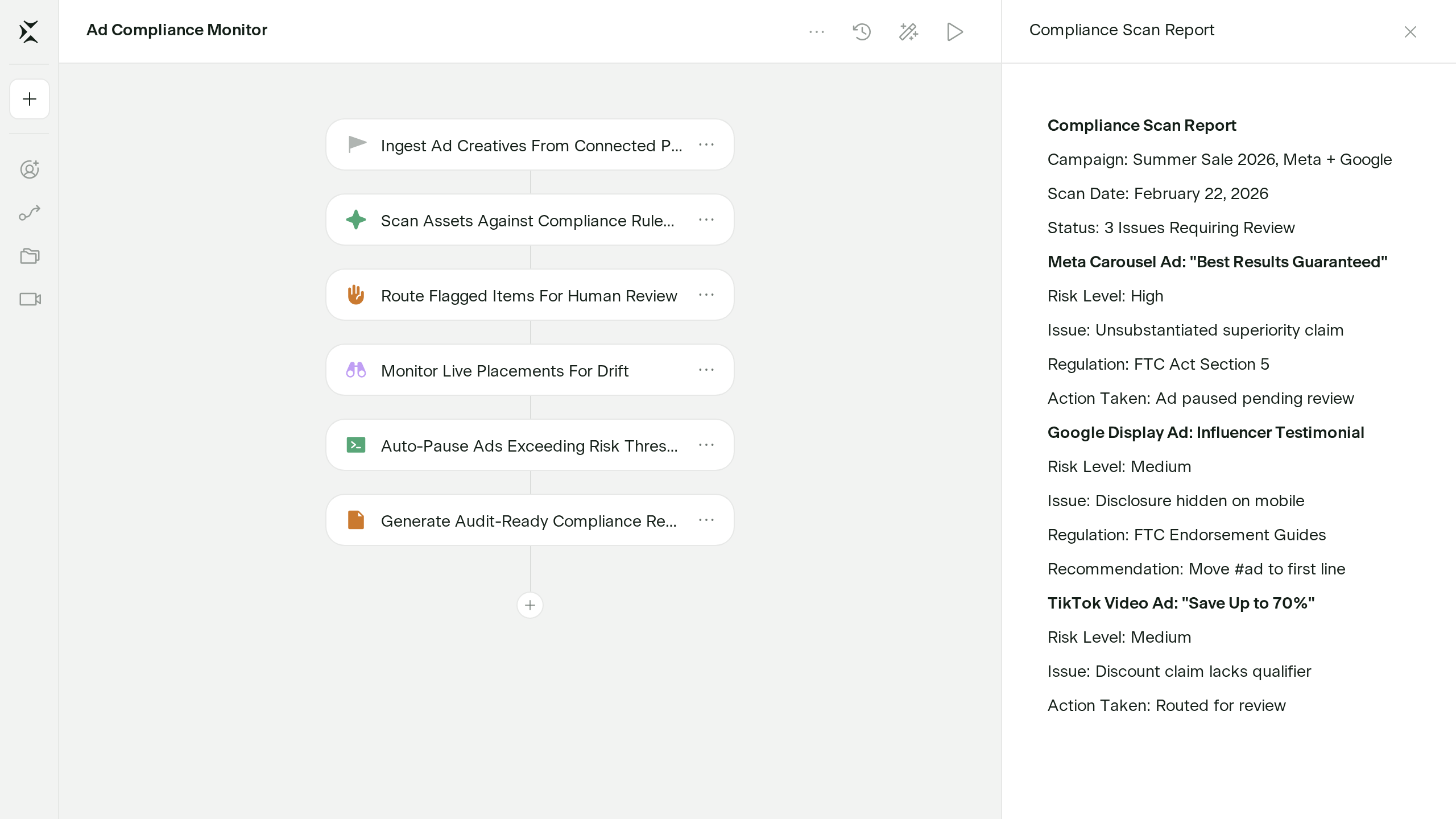
The Workflow triggers when new ad assets are uploaded or synced from Google Ads, Meta, TikTok, or your DSP. Cassidy extracts text via OCR, reads metadata, and pulls live renderings across placements and devices.
Step 2: Scan against your compliance rulebook
Cassidy checks each asset against your configured policy pack—detecting quantifiers and high-risk phrasing, verifying disclosure placement and prominence, mapping endorsements to material connection requirements, and flagging claims that need substantiation.
Step 3: Route exceptions for human review
High-risk findings are sent to your compliance or legal team via Slack, Teams, or Jira with side-by-side evidence and remediation guidance. Reviewers approve, deny, or grant time-bound exceptions with documented rationale.
Step 4: Monitor live placements for drift
After launch, Cassidy continuously crawls live ads—capturing screenshots, checking disclosure visibility in real user contexts, and comparing rendered assets against approved versions to catch truncation, layout changes, or localization issues.
Step 5: Auto-pause and alert on violations
When risk scores exceed your thresholds, Cassidy can automatically pause specific ad IDs or ad sets via platform APIs, then notify your team with severity details and next steps.
Step 6: Preserve audit-ready evidence
Every scan, approval, and remediation is logged with time-stamped captures, file hashes, and version history. Cassidy generates exportable compliance dossiers linking each claim to its substantiation and documenting the full chain of custody.
Implement this automation inside your company
- Hands-on onboarding and support
- Self-paced training for your team
- Dedicated implementation experts
- Ongoing use case discovery
- ROI tracking & analytics dashboards
- Proven playbooks to get started fast