
AI Compliance Monitoring Agent
Automating ACA Compliance Monitoring with AI
Continuous Full-Time Status Determination
The agent monitors employee hours across all client entities using look-back or monthly measurement methods, automatically flagging variable-hour employees, tracking stability periods, and identifying Limited Non-Assessment Period months to ensure accurate coding.
Real-Time Affordability Analysis
Automated workflows evaluate employee contributions against W-2, Rate of Pay, and Federal Poverty Line safe harbors each month, alerting brokers when affordability thresholds drift and recommending contribution adjustments before penalties accrue.
Validated 1094-C/1095-C Generation and E-Filing
The system generates complete, coded forms with accurate Line 14/15/16 combinations, validates data against IRS AIR business rules, and manages electronic filing—including corrections, state mandate submissions, and audit-ready documentation for Letter 226J responses.
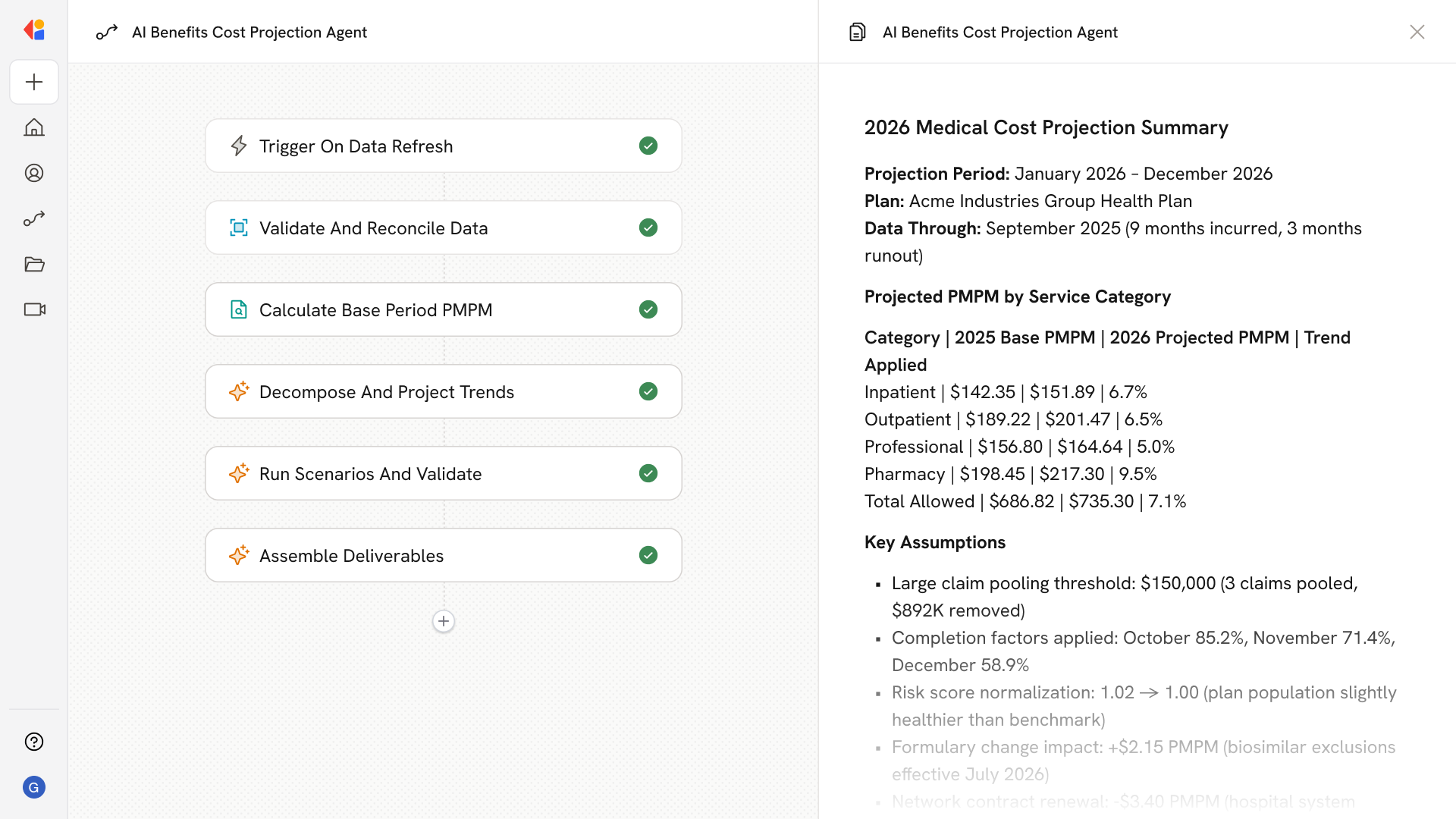
How Cassidy automates this using AI
Step 1: Trigger on data sync or calendar milestone
The Workflow activates when HRIS, payroll, or benefits enrollment data syncs to the Knowledge Base—or on scheduled intervals tied to measurement period transitions, open enrollment, and year-end filing deadlines.
Step 2: Determine ALE status and controlled group structure
Cassidy pulls employee counts and ownership data from connected systems, calculates full-time and FTE totals using prior-year monthly averages, maps Aggregated ALE Groups, and identifies which entity files as the Authoritative Transmittal.
Step 3: Track full-time status and eligibility
The agent applies the client's configured measurement method—monthly or look-back—to each employee, tracking hours, employment breaks, rehire rules, and stability period obligations. Variable-hour and seasonal employees are flagged with their current measurement status.
Step 4: Analyze affordability by safe harbor
Cassidy compares each employee's required contribution for the lowest-cost self-only MV plan against the elected safe harbor (W-2, Rate of Pay, or FPL), surfaces pass/fail results by month, and recommends contribution adjustments when thresholds are at risk.
Step 5: Generate coded 1094-C/1095-C forms
The Workflow assigns Line 14 offer codes, Line 15 contribution amounts, and Line 16 safe harbor or relief codes for each employee-month—handling edge cases like COBRA, ICHRA ZIP codes, conditional spousal offers, and union coverage. Part III is populated for self-insured months.
Step 6: Validate and e-file through IRS AIR
Cassidy validates the complete filing package against Pub. 5165 schemas and business rules, flags TIN mismatches or coding errors for Human-in-the-Loop review, and submits electronically. Acceptance, errors, and rejections are tracked with automated correction workflows.
Step 7: Manage state filings and furnishing
For clients in CA, DC, MA, NJ, or RI, Cassidy routes 1095 data to the appropriate state portals by deadline. Employee copies are furnished per IRS rules, with consent tracking and alternative website notice documentation where permitted.
Step 8: Prepare 226J response kits
When IRS penalty notices arrive, Cassidy compiles employee-month reconciliations, safe harbor documentation, offer evidence, and reasonable cause narratives—giving brokers an audit-ready defense package without manual reconstruction.
Implement it inside your company
- Hands-on onboarding and support
- Self-paced training for your team
- Dedicated implementation experts
- Ongoing use case discovery
- ROI tracking & analytics dashboards
- Proven playbooks to get started fast