
AI OSHA Safety Compliance Monitoring Agent
Automating OSHA Safety Compliance Monitoring with AI
Real-time PPE and hazard detection
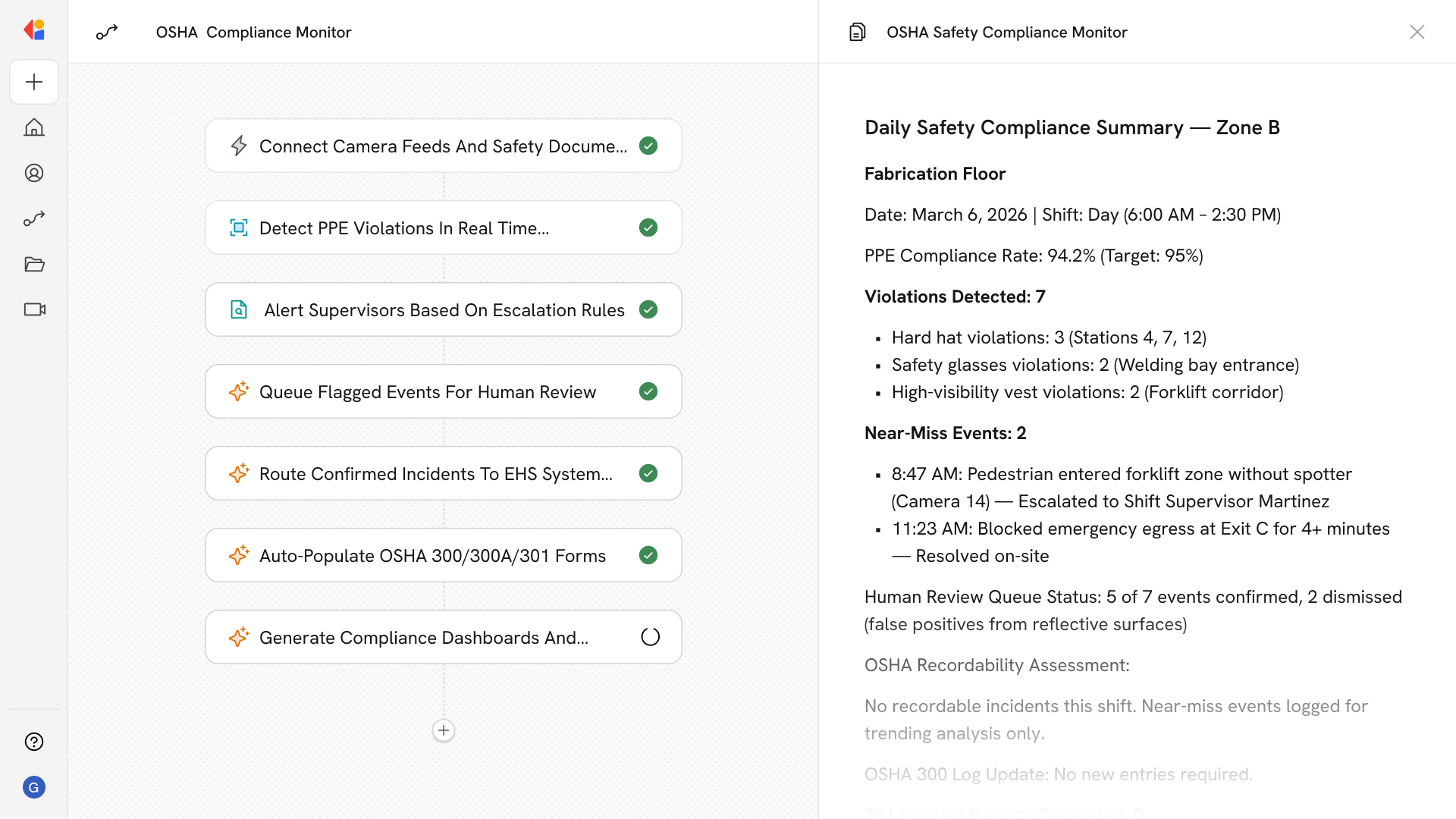
Computer vision monitors camera feeds continuously, flagging missing hard hats, eye protection, and high-vis gear while detecting unsafe behaviors like zone breaches and pedestrian-forklift close calls.
Near-miss capture and leading indicators
The agent quantifies risk exposure—not just event counts—surfacing SIF precursors and close-call patterns that let safety teams intervene before incidents escalate.
Automated OSHA recordkeeping
Confirmed incidents flow directly into 301 reports and the 300 Log, with the 300A summary compiled automatically and posting reminders triggered each February—no manual data entry required.
How Cassidy automates using AI
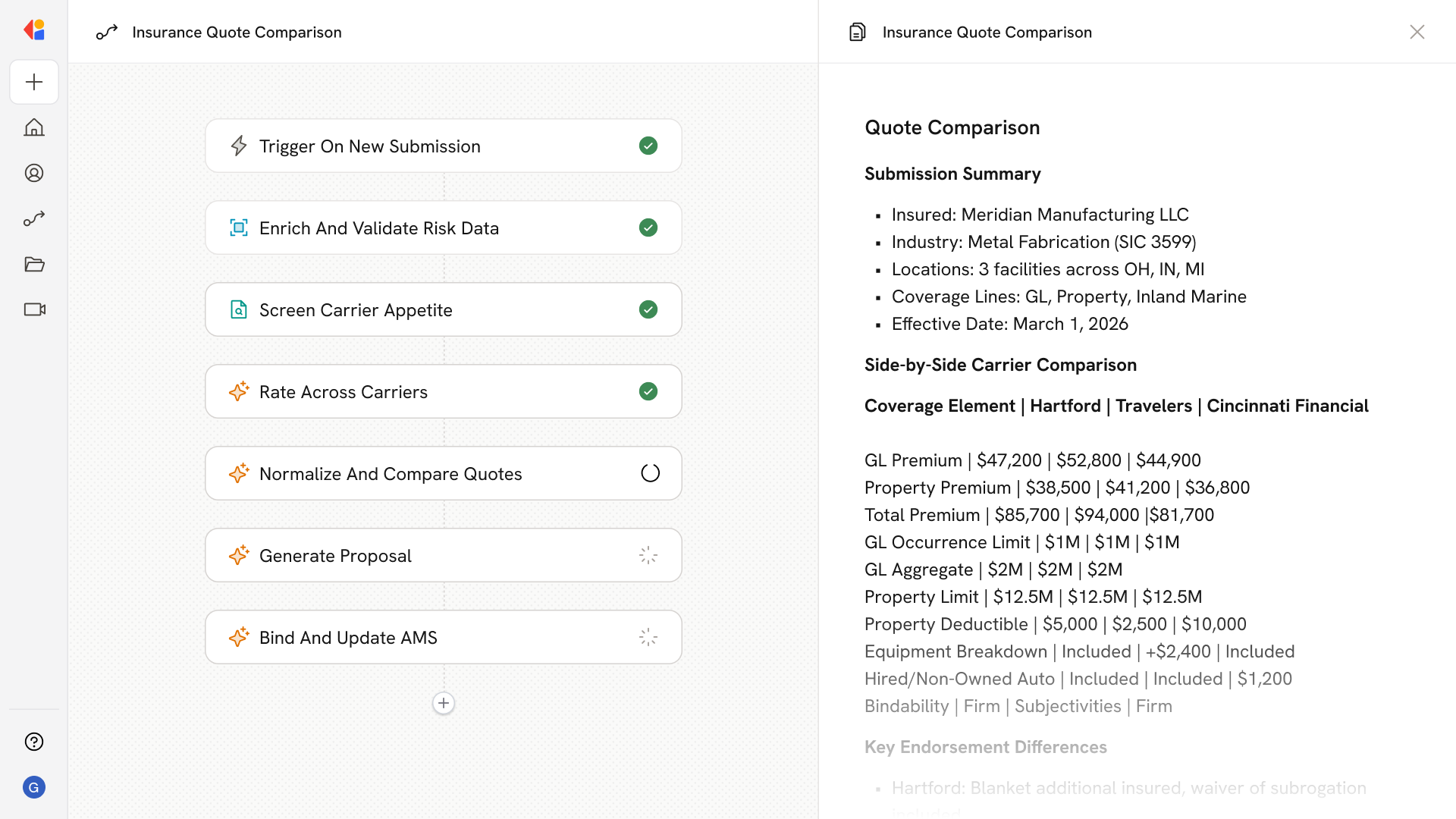
Step 1: Ingest camera feeds and safety documentation
Cassidy connects to your existing CCTV and IPC cameras via RTSP feeds, while syncing your PPE matrices, zone policies, and escalation rules into the Knowledge Base as a single source of truth.
Step 2: Detect PPE violations and unsafe conditions in real time
The Workflow runs continuous inference on video streams, identifying missing PPE (hard hats, eye protection, vests, gloves, respirators) and hazardous scenarios like zone breaches, forklift-pedestrian proximity, and blocked egress.
Step 3: Alert and escalate based on your rules
Detections trigger immediate actions—local audio/visual alarms, Teams or Slack notifications, or SMS alerts routed to supervisors—following the escalation matrix you've defined.
Step 4: Queue events for human review
Flagged incidents land in a review queue where your safety team confirms or dismisses detections, labels root causes, and provides feedback that improves model accuracy over time.
Step 5: Route confirmed events to incident management
Validated near-misses and incidents automatically create records in your EHS system, assign CAPA owners, and link to corrective actions with due dates.
Step 6: Auto-populate OSHA 300/300A/301 forms
Cassidy applies 29 CFR Part 1904 recordability criteria to confirmed cases, populates 301 incident reports, rolls data into the 300 Log, and compiles the annual 300A summary using your headcount and hours-worked data.
Step 7: Generate dashboards and compliance reminders
Safety scorecards surface PPE compliance rates by zone and shift, near-miss heatmaps, and TRIR/DART trends—while automated reminders ensure your 300A is posted February 1 through April 30 and ITA submissions are completed on time.
Implement it inside your company
- Hands-on onboarding and support
- Self-paced training for your team
- Dedicated implementation experts
- Ongoing use case discovery
- ROI tracking & analytics dashboards
- Proven playbooks to get started fast