
AI Application Engineering Knowledge Agent for Valve Sales Teams
Automating Valve Sizing and RFQ Drafting with AI
Intelligent Valve Sizing with Engineering Guardrails
The agent runs IEC 60534 capacity calculations, checks for cavitation and noise risks, and selects appropriate trim characteristics—flagging any conditions that fall outside acceptable limits before they become costly field issues.
Actuator Torque Selection with Built-In Safety Factors
Automated torque profiling accounts for breakaway, running, and seating forces at worst-case conditions, then matches ISO 5211-compatible actuators with appropriate safety margins based on service criticality.
Complete RFQ Packages Generated in Minutes
From valve datasheets and torque summaries to compliance matrices and BOMs, the system assembles technically validated quotation packages that would otherwise take hours of manual spreadsheet work.
How Cassidy automates using AI
Step 1: Capture service conditions
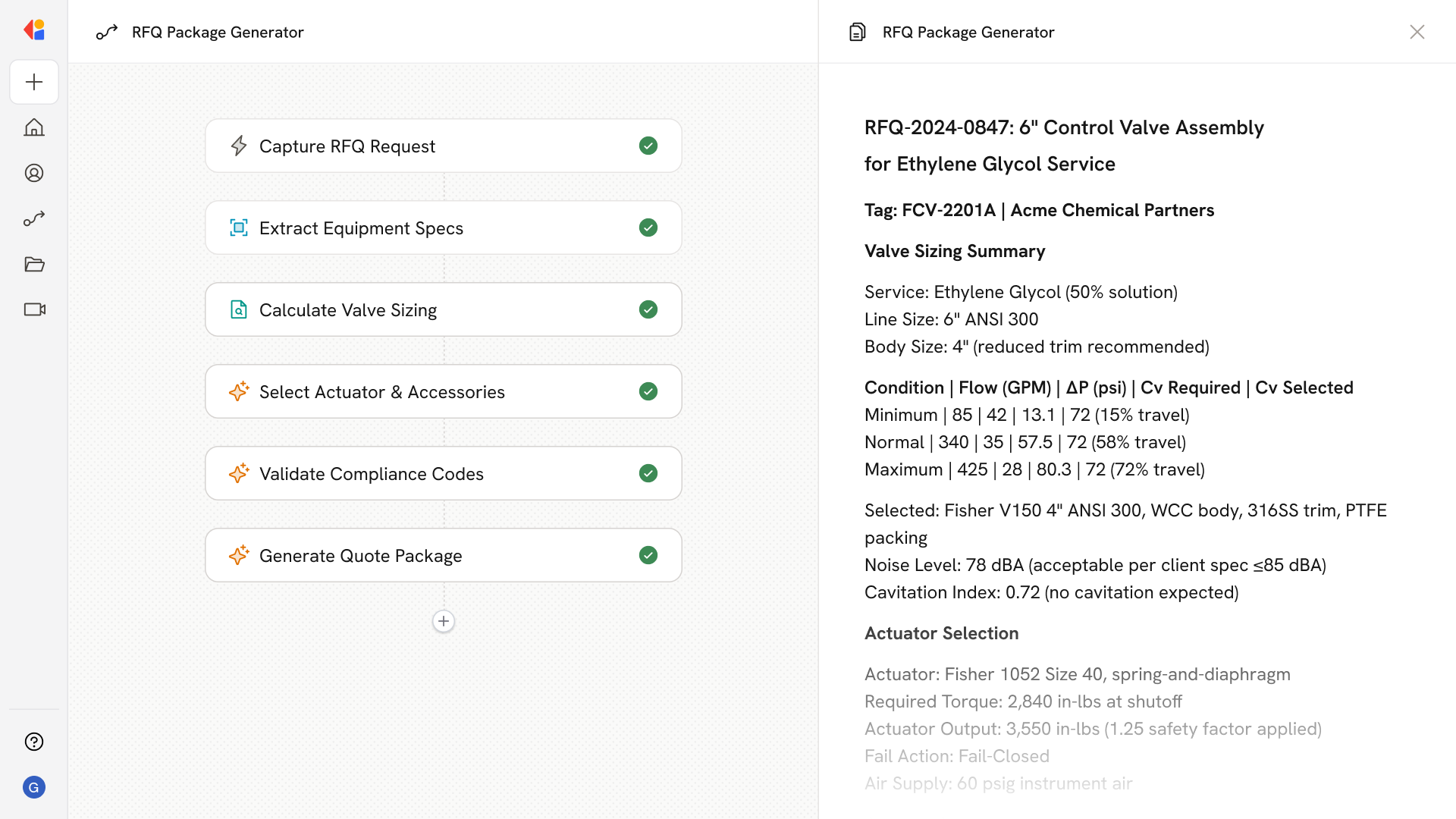
The Workflow triggers when an RFQ request arrives—via email, web form, or CRM entry. Cassidy extracts tagged equipment data, process conditions (medium, pressures, temperatures, flow ranges), piping specs, and actuation utility requirements into a structured format.
Step 2: Run valve sizing calculations
Cassidy applies IEC 60534 equations to determine Cv requirements across min/normal/max flows, checks pressure recovery factors and choked flow conditions, and evaluates cavitation indices and predicted noise levels. The system recommends body size, trim style, and materials while keeping normal operating travel within the 40–70% range.
Step 3: Size and select actuators
Using the valve's torque profile at worst-case differential pressure, Cassidy calculates required actuator output with appropriate safety factors (1.25 for standard service, higher for critical applications). It validates ISO 5211 mounting compatibility, confirms fail-safe action, and selects accessories including positioners, solenoid valves, and limit switches.
Step 4: Apply engineering guardrails
Before finalizing, Cassidy runs automated checks against ANSI/FCI 70-2 leakage classes, API 598 test requirements, fire-safe certifications, and emissions compliance. Any deviations or missing inputs are flagged for review rather than silently passed through.
Step 5: Generate the RFQ package
Cassidy assembles the complete quotation: valve and actuator datasheets, Cv sizing results with noise/cavitation assessments, torque summaries, BOM with tag breakdown, compliance matrix to client specs and referenced codes, and pricing with lead times—ready for application engineer review and customer delivery.
Implement it inside your company
- Hands-on onboarding and support
- Self-paced training for your team
- Dedicated implementation experts
- Ongoing use case discovery
- ROI tracking & analytics dashboards
- Proven playbooks to get started fast